In recent years, demand for materials used in marine and offshore infrastructure has grown significantly. The primary drivers remain offshore oil and gas production, the development of LNG terminals, subsea pipelines, energy transportation systems, offshore platforms, and processing facilities. Additional demand is being generated by offshore renewable energy projects, where corrosion-resistant tubes are used in cooling systems, hydraulics, fire protection systems, and auxiliary marine infrastructure.
At the same time, the offshore pipeline market continues to expand. According to Zion Market Research, its value reached approximately USD 15.39 billion in 2023 and is projected to grow to USD 23.26 billion by 2032, with a compound annual growth rate of approximately 4.82%. For customers, this is changing the approach to tube selection: purchase price is no longer the only consideration. Service life, resistance to chloride corrosion, pressure stability, minimal downtime, and a lower total cost of ownership are becoming equally important.
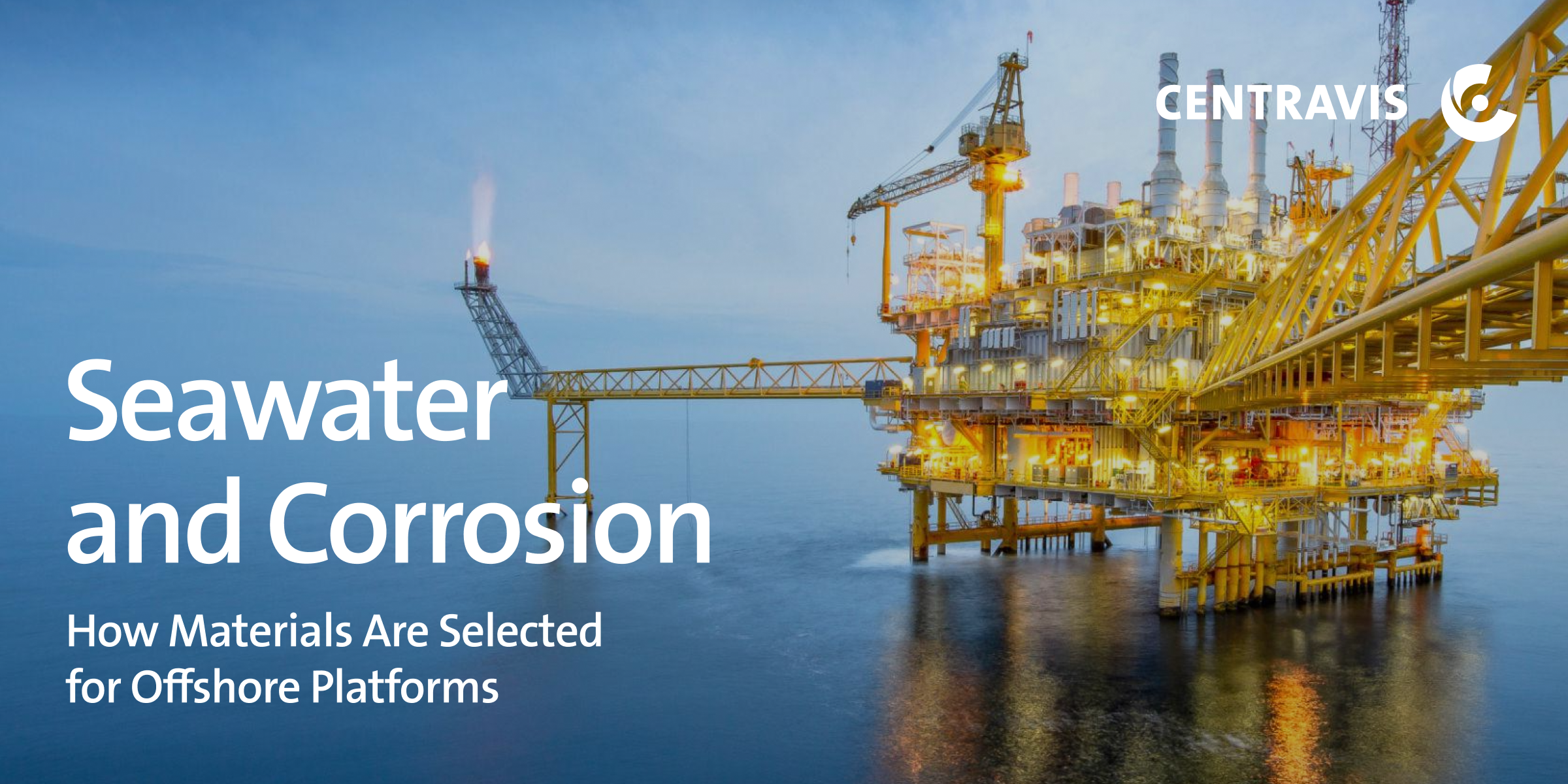
Offshore platforms operate in one of the most aggressive environments for metals. Seawater saturated with chlorides, constant humidity, cyclic loads, high pressure, and temperature fluctuations create conditions in which conventional materials rapidly lose their properties. This is why tubes used in subsea pipelines, heat exchangers, cooling systems, offshore hydraulics, seawater supply systems, and hydrocarbon production equipment must meet stringent requirements for corrosion resistance, strength, and durability.
Corrosion Resistance as the Primary Criterion
The main challenge for offshore infrastructure is corrosion. Seawater contains high concentrations of chlorides that promote pitting, crevice, and intergranular corrosion. Particularly dangerous is the combination of a chloride-rich environment with elevated temperatures and mechanical loads, which can lead to stress corrosion cracking (SCC).
This is why offshore platforms rely on specialized stainless and duplex steels capable of maintaining stability under such conditions. Their key characteristics include:
- High chromium and molybdenum content
- Resistance to pitting corrosion
- Microstructural stability
- High yield strength
- Resistance to metal fatigue
Which Centravis Steel Grades Are Used in Marine Applications
Among Centravis products, duplex and super duplex steels, as well as highly alloyed austenitic grades, are particularly important for offshore applications. The company’s portfolio includes materials that comply with international ASTM and EN standards and are designed for use in critical environments.
Among the grades most resistant to seawater corrosion are:
- S31803 / S32205 (Duplex)
- S32750 (Super Duplex)
- TP316L / TP316LN
- 904L (N08904)
Duplex and Super Duplex Steels for Offshore Applications
Duplex grades S31803 and S32205 combine austenitic and ferritic structures, providing both high mechanical strength and corrosion resistance. They are widely used in marine pipelines, offshore structures, and high-pressure systems.
For even more aggressive environments, Super Duplex S32750 is used. Thanks to its elevated chromium, molybdenum, and nitrogen content, this grade demonstrates exceptional resistance to pitting and crevice corrosion in chloride-rich environments. It also offers high resistance to SCC, which is critical for marine infrastructure.
Another important advantage is that duplex materials provide significantly higher yield strength compared to conventional austenitic steels. This makes it possible to use thinner tube walls without compromising strength, reducing the weight of offshore structures and lowering the load on the platform.
Nikopolium for Seawater and Critical Offshore Environments
Particular attention should be paid to the innovative Nikopolium NP 2205 / NP 2507 material developed by Centravis. These are next-generation duplex and super duplex steels designed to operate in extreme environments, including seawater, offshore structures, LNG systems, and chloride-containing media. The materials combine corrosion resistance approaching that of nickel alloys with the strength and cost-efficiency of duplex steels.
For seawater applications, Nikopolium is particularly valuable due to its enhanced resistance to pitting, crevice, and intergranular corrosion. According to Centravis, NP 2205 demonstrates pitting resistance at temperatures 10 °C higher than standard duplex UNS S31803, while NP 2507 exceeds super duplex UNS S32750 by 5 °C. In addition, these materials are tested in accordance with ASTM G48 and ASTM G28 and feature an optimized ferrite-austenite balance with a high proportion of high-angle grain boundaries, improving stability in complex corrosive environments.
Another advantage of Nikopolium for offshore projects is its combination of high strength and a wide operating temperature range, from –60 °C to +350 °C. The material offers tensile strength of up to 1000 MPa and impact toughness of up to 188 J at –60 °C. This makes it suitable not only for seawater applications but also for subsea systems, LNG infrastructure, heavily loaded pipelines, heat exchangers, and equipment exposed simultaneously to pressure, chlorides, temperature fluctuations, and mechanical stress.
From an environmental perspective, Nikopolium also supports the concept of more sustainable offshore solutions. Its high strength enables the use of thinner tube walls, reducing structural weight, metal consumption, and transportation-related emissions. Furthermore, its lower nickel content compared to nickel alloys reduces dependence on resource-intensive alloying elements and helps optimize a project’s environmental footprint.
Austenitic Steels for Marine Systems
For systems operating under moderate loads or requiring complex fabrication, TP316L and TP316LN are widely used. The molybdenum content in TP316L improves resistance to localized corrosion in seawater, while its low carbon content minimizes the risk of intergranular corrosion after welding.
For highly aggressive chemical environments within marine infrastructure, 904L is commonly used. This highly alloyed austenitic steel contains elevated levels of nickel and molybdenum, providing exceptional resistance to acids and chlorides. It is frequently used in seawater treatment systems and offshore chemical processing applications.
Why Corrosion Resistance Is Not the Only Requirement Offshore
Although corrosion is the primary threat, offshore tubes must also meet a number of other critical requirements. They operate under high internal pressure and are exposed to vibration, cyclic loading, and temperature fluctuations. Therefore, the material must simultaneously provide:
- High strength
- Fatigue resistance
- Impact toughness
- Long-term operational stability
Microstructural stability is especially important. It is this factor that determines the durability of tubes operating in environments where seawater, high pressure, and mechanical loads are combined.
Centravis Technologies for the Offshore Industry
Centravis employs advanced hot extrusion, cold drawing, and controlled heat treatment technologies. These processes make it possible to achieve a homogeneous microstructure and highly precise tube geometry.
Particularly important is the control of phase balance in duplex and super duplex steels. The correct ratio of austenite to ferrite ensures an optimal balance between strength and corrosion resistance.
The company’s production complies with ASTM A789, ASTM A790, EN 10216-5, and other international requirements for critical industries.
The Environmental Aspect of Offshore Materials
For marine infrastructure, environmental performance is just as important as durability. Corrosion of offshore systems can lead to leaks of oil, gas, or process fluids into the marine environment. This is why durable, corrosion-resistant materials directly contribute to reducing environmental risks.
In addition, the use of high-strength duplex steels makes it possible to:
- Reduce structural weight
- Decrease metal consumption
- Lower energy requirements for transportation and installation
- Extend equipment service life
As a result, the overall carbon footprint of offshore projects is reduced, while the infrastructure itself becomes more sustainable and safer.
Conclusion
Offshore platforms operate in one of the most challenging environments for metals, making material selection a critical factor in the safety, durability, and efficiency of piping systems. Duplex, super duplex, and highly alloyed austenitic steels from Centravis provide the combination of corrosion resistance, mechanical strength, and longevity required for operation in seawater.
Through advanced manufacturing technologies, precise microstructural control, and compliance with international standards, Centravis products enable the development of a new generation of offshore systems that are more reliable, cost-effective, and environmentally responsible.