27.10.2026
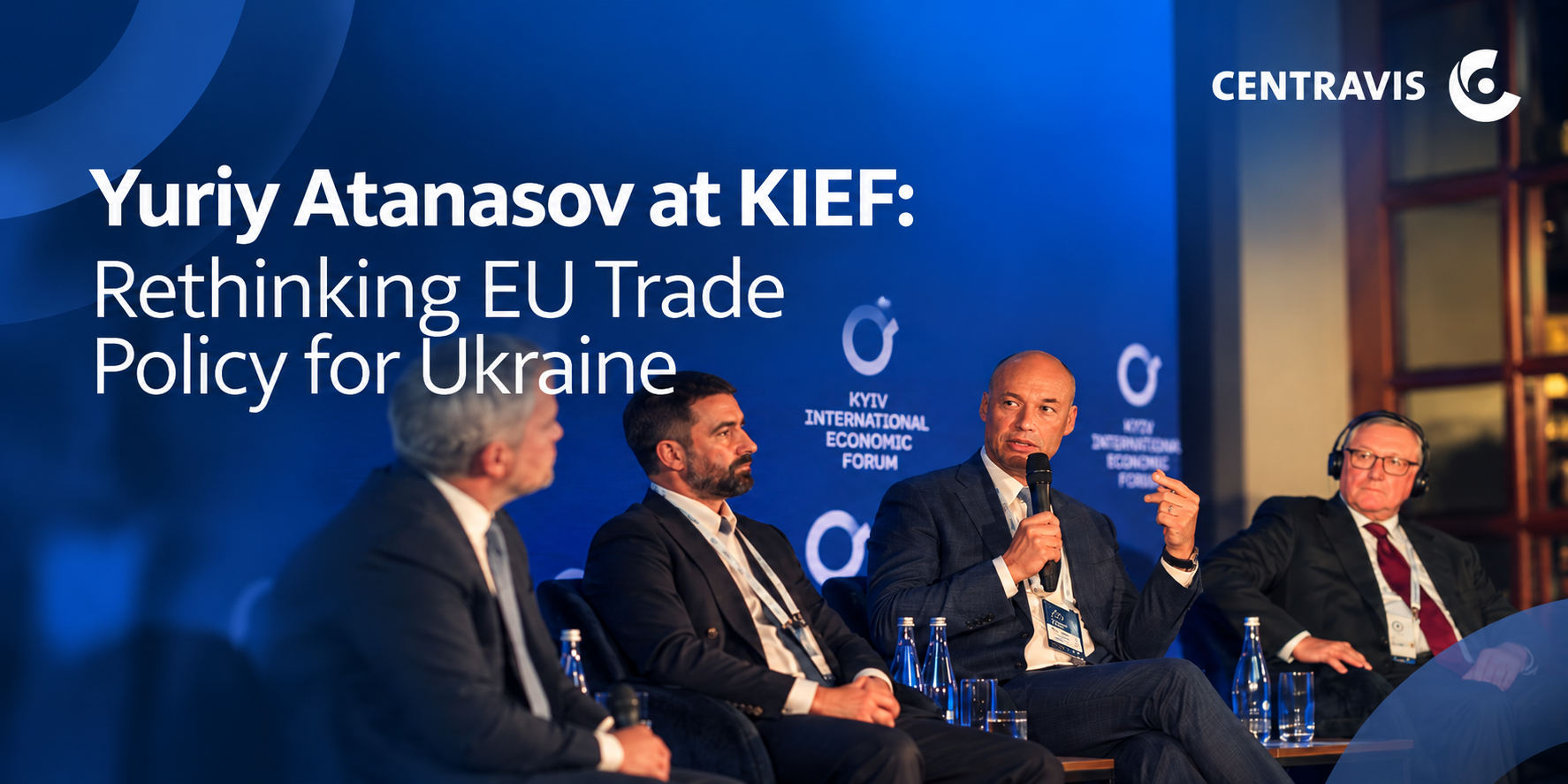
Ukraine and the European Union need a shared industrial agenda that will help preserve existing manufacturing ties, reconsider trade barriers, and create favorable conditions for future investment. This was the key message delivered by Yuriy Atanasov, Co-owner and Chief Executive Officer of CENTRAVIS, during the Kyiv International Economic Forum (KIEF).
Yuriy Atanasov participated in the panel discussion “Global Markets: Closed Doors or New Opportunities?” The discussion also featured Taras Kachka, Ukraine’s Representative to the European Union; David Godfrey, Board Member of British-Ukrainian Economic Future and former CEO of UK Export Finance; and Oleksandr Vodoviz, Head of the CEO’s Office at Metinvest Group. The panel was moderated by Mykhailo Bno-Ayriian, Vice President for Global Affairs at MHP.
During his remarks, the CENTRAVIS CEO highlighted the contradiction between Ukraine’s ongoing economic integration with the EU and the trade restrictions that create additional challenges for Ukrainian manufacturers already deeply integrated into European industrial supply chains.
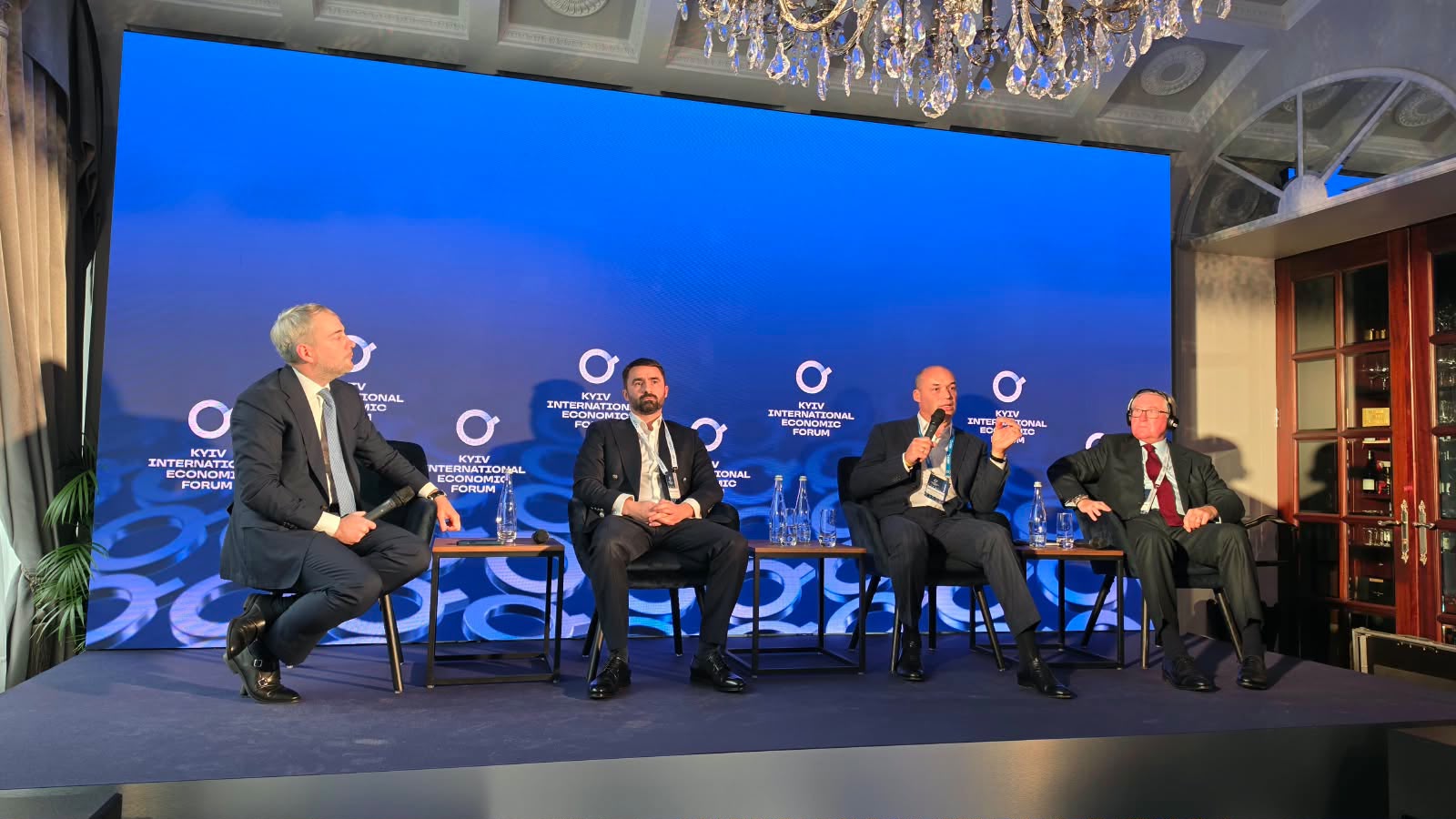
“We are not asking Europe to create an artificial market for us. We are already part of this market. We have earned our position through quality, technology, investment, and decades of hard work,” said Yuriy Atanasov.
CENTRAVIS exports approximately 96% of its production, with more than 70% of shipments destined for the European Union. The company’s seamless stainless steel tubes and pipes are widely used in the automotive, energy, and chemical industries.
According to Yuriy Atanasov, the annual quota of approximately 6,500 tonnes for the relevant category of Ukrainian seamless stainless steel tubes is around 54% lower than the company’s pre-war export volumes in 2021. CENTRAVIS emphasizes that using wartime trade figures as a benchmark for market access effectively reinforces the economic consequences of Russian aggression.
According to CENTRAVIS data, shipments to European customers declined by 52% year-on-year during the first quarter following the introduction of the new restrictions. The company was also forced to suspend operations at its production facility in Uzhhorod.
More than 15 European customers of CENTRAVIS have appealed to the European Commission in support of reconsidering the current restrictions. For high-tech manufacturers, replacing a certified supplier involves additional testing, approvals, and considerable time.
Yuriy Atanasov also addressed the implementation of the Carbon Border Adjustment Mechanism (CBAM). He emphasized the importance of enabling independent verification of actual emissions at the company’s manufacturing facilities in Nikopol, taking into account existing security restrictions. Reliance on default emissions values could significantly increase carbon-related costs for European importers and weaken the competitiveness of Ukrainian products.
To address these challenges, CENTRAVIS proposes establishing an annual quota of 14,300 tonnes, introducing temporary measures to ease the financial burden associated with CBAM in 2027–2028, and strengthening cooperation between the Ukrainian government, domestic businesses, and European industrial partners.
“Economic integration does not begin on the day of formal EU accession. It is already happening today — through every contract, every investment, and every manufacturing decision,” Yuriy Atanasov concluded.